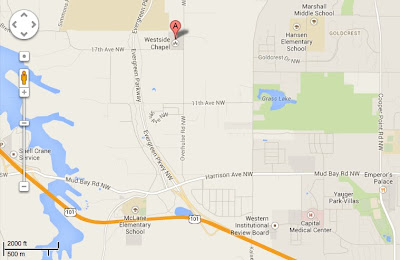
The Mission Spit site failed to meet National Register of Historic Places eligibility criteria, the parameters for official "significance," because of a lack of integrity. Specifically, in archaeocratic reasoning, there are two weaknesses to the site, if you are looking at it as a collection of archaeological data. One is that it is a beach deposit instead of the remains of a structure or primary deposit associated with the mission; its stuff that was tossed toward water, moved around by freshets, waves, and tides, rather than things that were stashed, cached, or dropped into corners or through floor boards, The second is that when I did the shovel probes and test unit, there was no correspondence between depth and age. The oldest types of glass showed up from the top of the deposit to the bottom, and same for the newest.
The second conclusion, the lack of a Deeper = Older stratigraphy, may have been reinforced by the presence of a few "pre-Contact" materials, things like fire-cracked rock and an arrowhead that are generally interpreted as evidence of use prior to the arrival of Euro-Americans or Asians. The assumption underlying this conclusion, that traditional indigenouse technologies were abandoned as soon as foreign ones showed up, has been something that drove me nuts over the years both here and in Hawai`i where I used to work. Maybe the arrowhead was washed in from a midden site up the coast, or maybe it was still cheaper than bullets in 1850 (much less a few years later, when tribal people interested in ammo were greeted with a higher level of suspicion), or maybe it was a memento or ornament. And while copper pots were available at Fort Nisqually, and the local French priests may have come equipped with tureens, it's hard for me to imagine that the Native people quickly and completely abandoned the utility of fire-heated rocks.
So maybe the "pre-Contact" artifacts are in fact "Contact." Salish technologies that persisted. Archival evidence indicates that the northern edge of the Catholic Mission was where the orchards, garden, school for Native kids, and associated Native parents's settlement occured. Squaxin Tribe oral history says that somewhere at Priest Point, Tribal people were interned before their removal to their island reservation in 1860. While drift cell movement of an up-coast midden deposit or mixing of shallow and deep beach sediments are plausible explanations for the presence of traditional artifacts along with historically introduced ones, it seems simpler given then history of the place to interpret this mixing as evidence of a Contact era site. If the historic artifacts in the cultural layer fall between 1848-1880, then maybe the fire-cracked rock and lithics do as well.
Which brings me to this photo, which is just what I was hoping this salvage effort would reveal:

Two scrapers. Or at least that's my interpretation, upon which I will expound: The bottom edges are beveled, with tiny flakes indicative of use wear along the blade. They're about the same size, both triangular, and to my sinsetral dismay they both seem to fit a right-handed grip best. But the left one is made of an alcohol bottle, and the right one of stone. Not local stone, unless it was a lucky find in a glacial gravel deposit, and therefore not necessarily easy to replace.
But then these French guys show up, drinking from vessels made of what seems to be some kind of obsidian, the stone that grand-dad used to talk about, available only in a land weeks away to the south. And the foreigners just toss it when they're done. Nice raw material for scrapers, maybe arrowheads and knives too, but we haven't found those...yet.
The second conclusion, the lack of a Deeper = Older stratigraphy, may have been reinforced by the presence of a few "pre-Contact" materials, things like fire-cracked rock and an arrowhead that are generally interpreted as evidence of use prior to the arrival of Euro-Americans or Asians. The assumption underlying this conclusion, that traditional indigenouse technologies were abandoned as soon as foreign ones showed up, has been something that drove me nuts over the years both here and in Hawai`i where I used to work. Maybe the arrowhead was washed in from a midden site up the coast, or maybe it was still cheaper than bullets in 1850 (much less a few years later, when tribal people interested in ammo were greeted with a higher level of suspicion), or maybe it was a memento or ornament. And while copper pots were available at Fort Nisqually, and the local French priests may have come equipped with tureens, it's hard for me to imagine that the Native people quickly and completely abandoned the utility of fire-heated rocks.
So maybe the "pre-Contact" artifacts are in fact "Contact." Salish technologies that persisted. Archival evidence indicates that the northern edge of the Catholic Mission was where the orchards, garden, school for Native kids, and associated Native parents's settlement occured. Squaxin Tribe oral history says that somewhere at Priest Point, Tribal people were interned before their removal to their island reservation in 1860. While drift cell movement of an up-coast midden deposit or mixing of shallow and deep beach sediments are plausible explanations for the presence of traditional artifacts along with historically introduced ones, it seems simpler given then history of the place to interpret this mixing as evidence of a Contact era site. If the historic artifacts in the cultural layer fall between 1848-1880, then maybe the fire-cracked rock and lithics do as well.
Which brings me to this photo, which is just what I was hoping this salvage effort would reveal:

Two scrapers. Or at least that's my interpretation, upon which I will expound: The bottom edges are beveled, with tiny flakes indicative of use wear along the blade. They're about the same size, both triangular, and to my sinsetral dismay they both seem to fit a right-handed grip best. But the left one is made of an alcohol bottle, and the right one of stone. Not local stone, unless it was a lucky find in a glacial gravel deposit, and therefore not necessarily easy to replace.
But then these French guys show up, drinking from vessels made of what seems to be some kind of obsidian, the stone that grand-dad used to talk about, available only in a land weeks away to the south. And the foreigners just toss it when they're done. Nice raw material for scrapers, maybe arrowheads and knives too, but we haven't found those...yet.